


Research

-
2026.02.09
FAST Reveals the Supernova Origin of Fast Radio Bursts
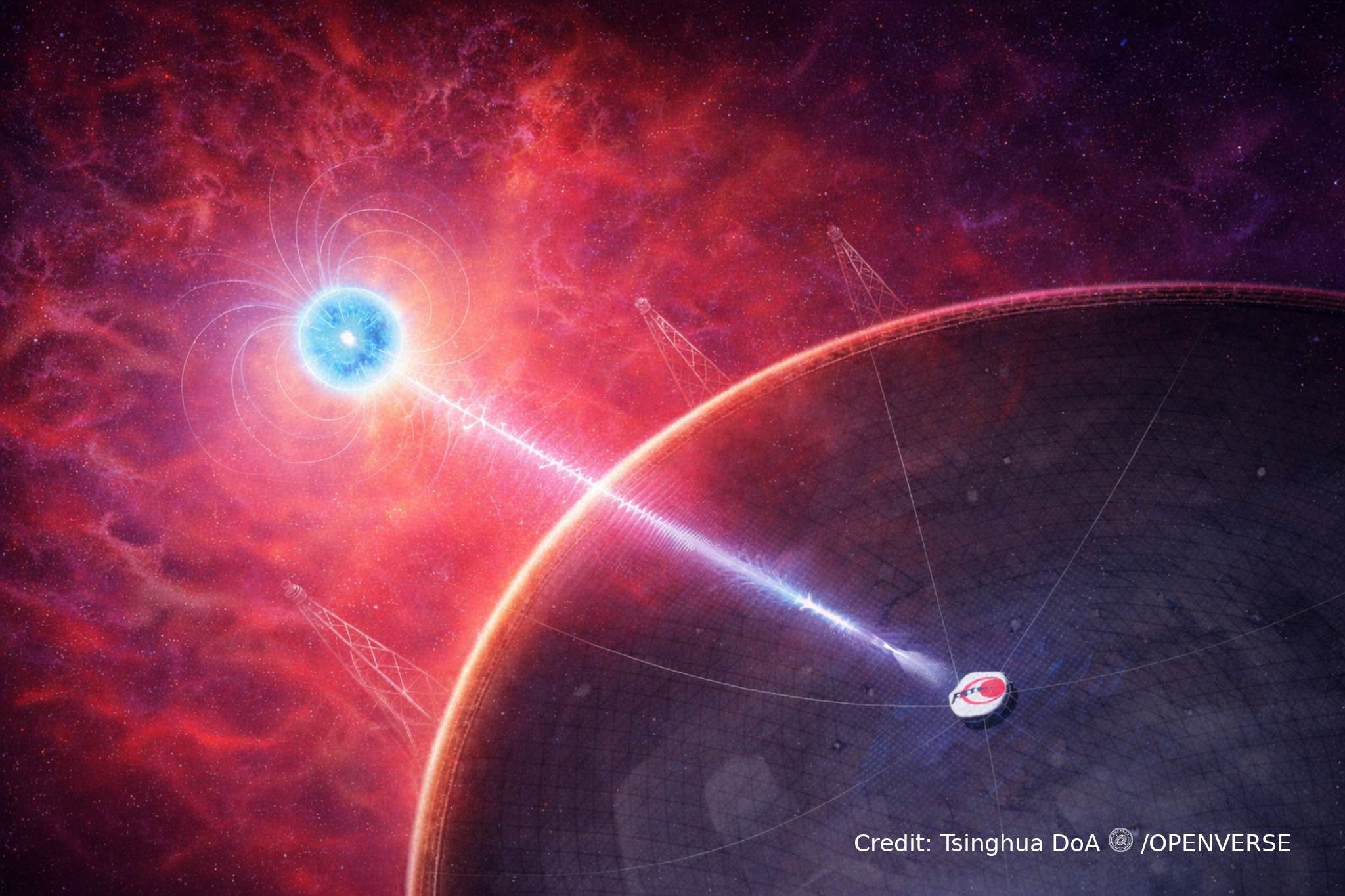
Prof. Di Li’s team at Tsinghua University, in collaboration with scientists from Central China Normal University, Yunnan University, and the National Astronomical Observatories of the Chinese Academy of Sciences, conducted a systematic, multi-year monitoring survey of a fast radio burst using China’s Five-hundred-meter Aperture Spherical radio Telescope (FAST). For the first time, they witnes...
More -
2026.01.07
A Newly Identified Degeneracy in Microlensing Two-Planet Systems
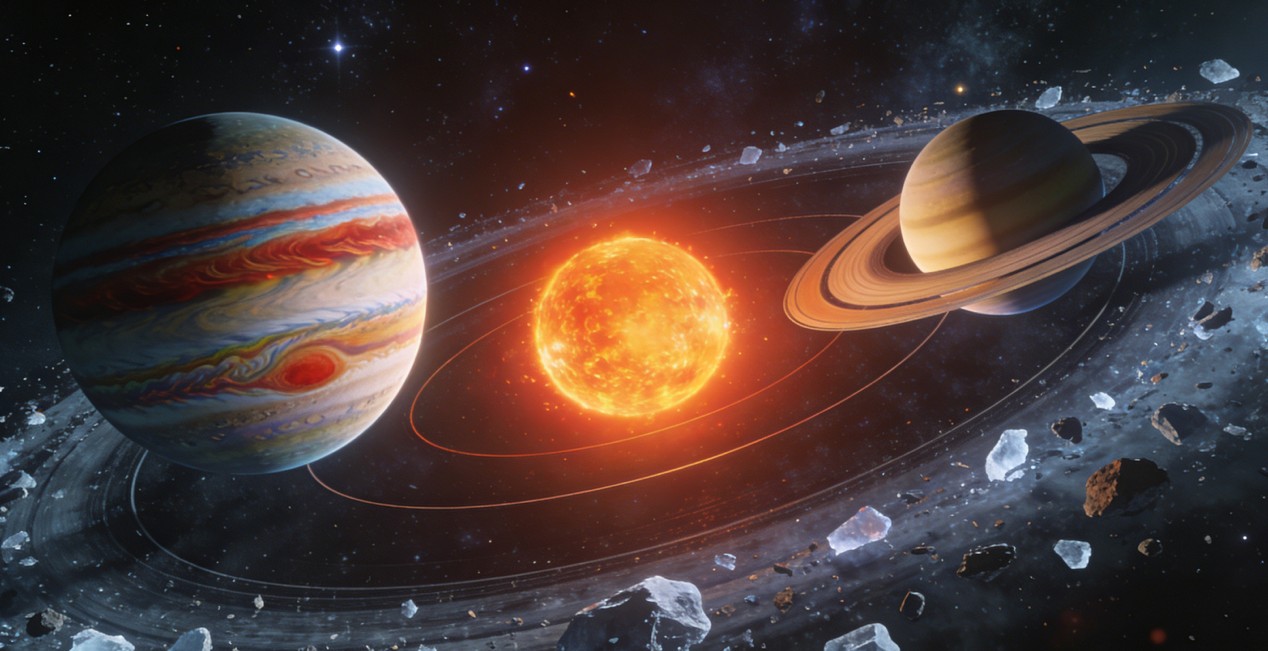
Credit: AI DoubaoA new study published in The Astronomical Journal (AJ) reports the discovery of a previously unrecognized degeneracy in microlensing two-planet systems, highlighting the need for caution when interpreting complex planetary signals in future space-based microlensing surveys.The two planets were discovered through the microlensing event KMT-2022-BLG-1818, with the planetary signa...
More -
2025.12.12
Tsinghua University and Leiden Observatory Jointly Reveal the Diversity of Obscured Quasars and Supermassive Black Hole Growth in the Universe
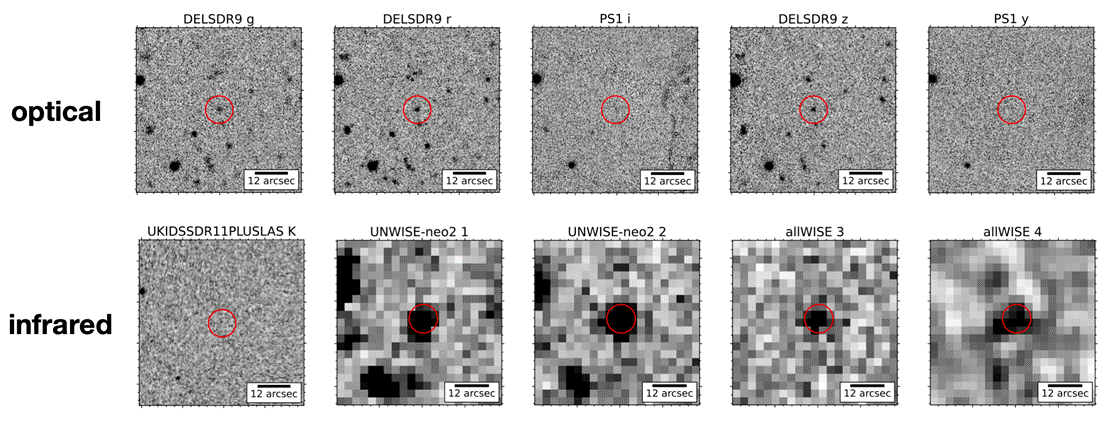
Abstract: An international research team led by the Department of Astronomy at Tsinghua University has successfully identified 23 of the most luminous dust-obscured quasars (Type-2 QSOs) from the 'cosmic noon' (2 to 3 billion years after the Big Bang corresponding to redshift z = 0.88–3.49), using spectroscopic observations from the world's most advanced ground-based telescopes, Keck and Gemin...
More -
2025.11.19
Decoding Andromeda: Tsinghua and PMO Team Reveal "Premature Fading" of X-ray Binaries
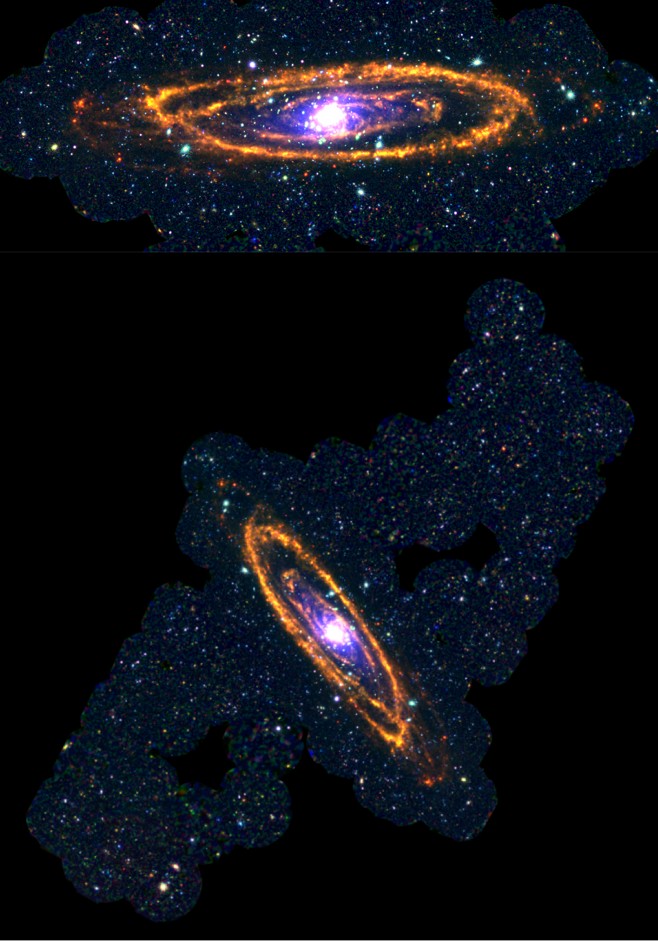
A joint research team led by the Department of Astronomy at Tsinghua University and the Purple Mountain Observatory (PMO) of the Chinese Academy of Sciences has conducted the most comprehensive X-ray survey to date of our neighboring galaxy, Andromeda (M31), using the European Space Agency’s (ESA) XMM-Newton space telescope. The study reveals that the total X-ray luminosity of Low-Mass X-ray B...
More -
2025.11.14
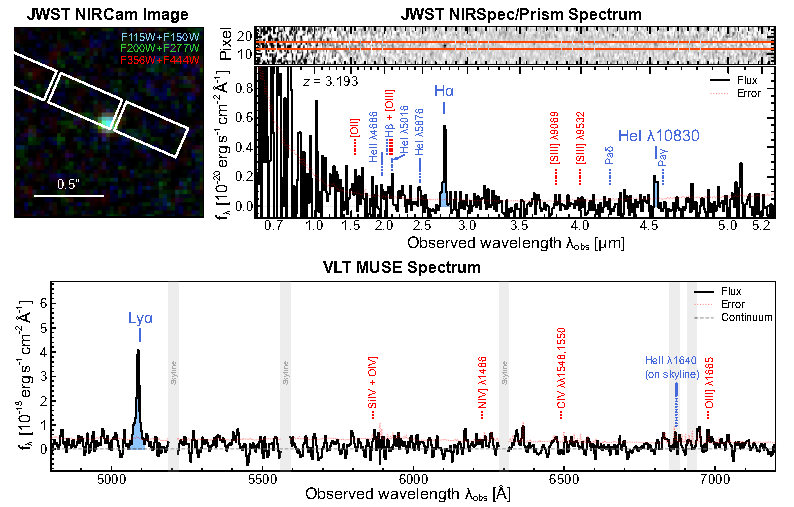
A “Living Fossil” of the Very Early Universe? Discovery of a First-Generation Galaxy at Cosmic Noon
Introduction: An international collaboration led by the Department of Astronomy at Tsinghua University has discovered a galaxy extremely poor in metals, suspected to contain "first-generation" stars, by using combined observations from the James Webb Space Telescope (JWST), the Very Large Telescope (VLT), and the Subaru Telescope. The team has named this galaxy "CR3". It is located in the "cosm...
More