


Research

-
2025.09.29
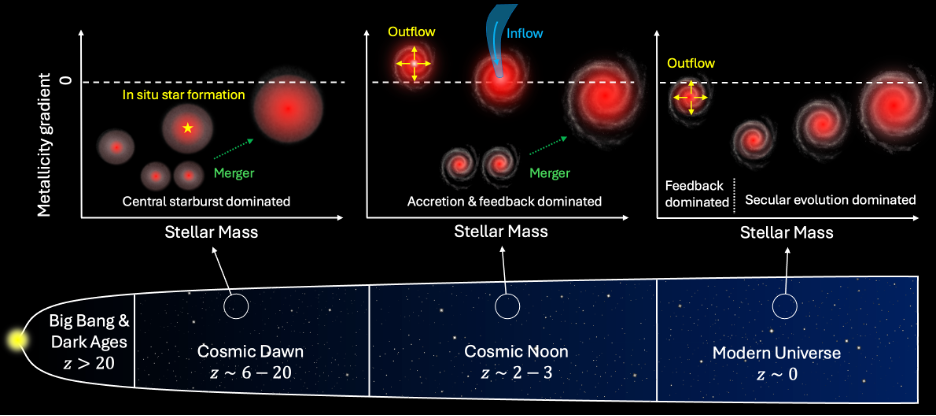
Tsinghua University and the National Astronomical Observatories Decode 13-billion-year Evolution of Galactic Metallicity Gradients
By combining the latest observations from the James Webb Space Telescope (JWST) with nearly half a century of Hubble Space Telescope data and contributions from multiple ground-based observatories, astronomers at Tsinghua University have mapped the metallicity gradients from the early Universe to the nearby galaxies. During the 13 billion years of cosmic history, the distribution of heavy eleme...
More -
2025.06.11
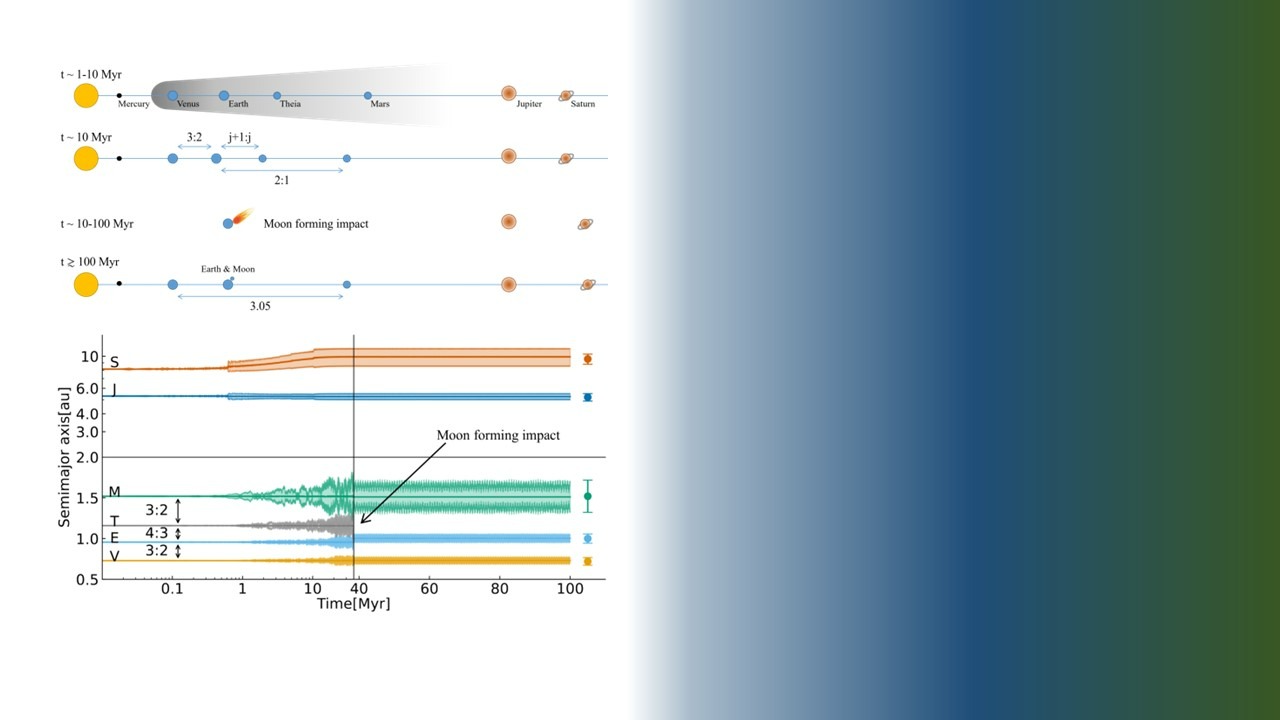
The Solar system terrestrial planets started in resonance
Traditionally, models have proposed that Earth and its rocky neighbors formed gradually, through a series of chaotic collisions between Mars-size bodies and planetesimals, after the Solar System’s gas disk had dispersed. Recent observations of young exoplanets suggest a different story: many planets form early, while still embedded in their young gas disks. Due to orbital migration, proto-plan...
More -
2025.06.05
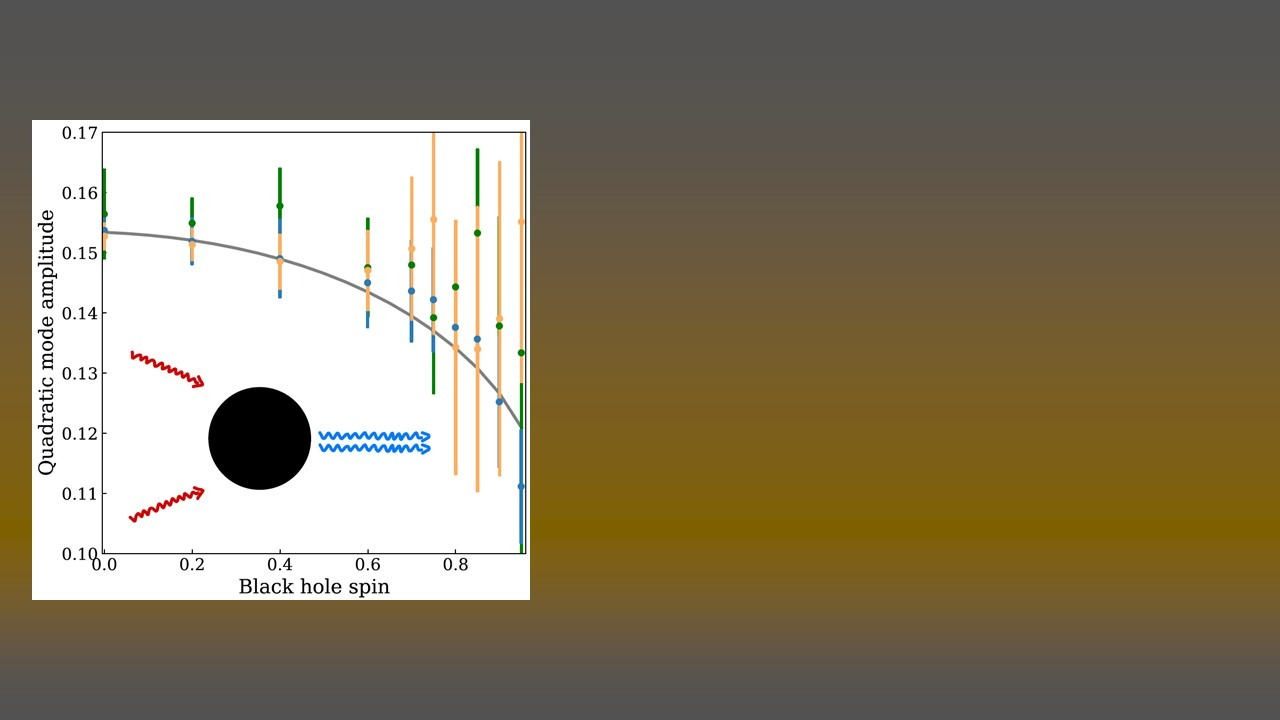
Studying the harmonies of spinning black holes
A study led by a team of researchers from Tsinghua University and Perimeter Institute, has shed new light on the intricate gravitational waves produced by merging black holes in their final stages. Their research calculates the nonlinear waves produced by black holes in their final stages after a merger. This work establishes a theory that describes wave-wave interactions around generic rotatin...
More -
2025.05.26
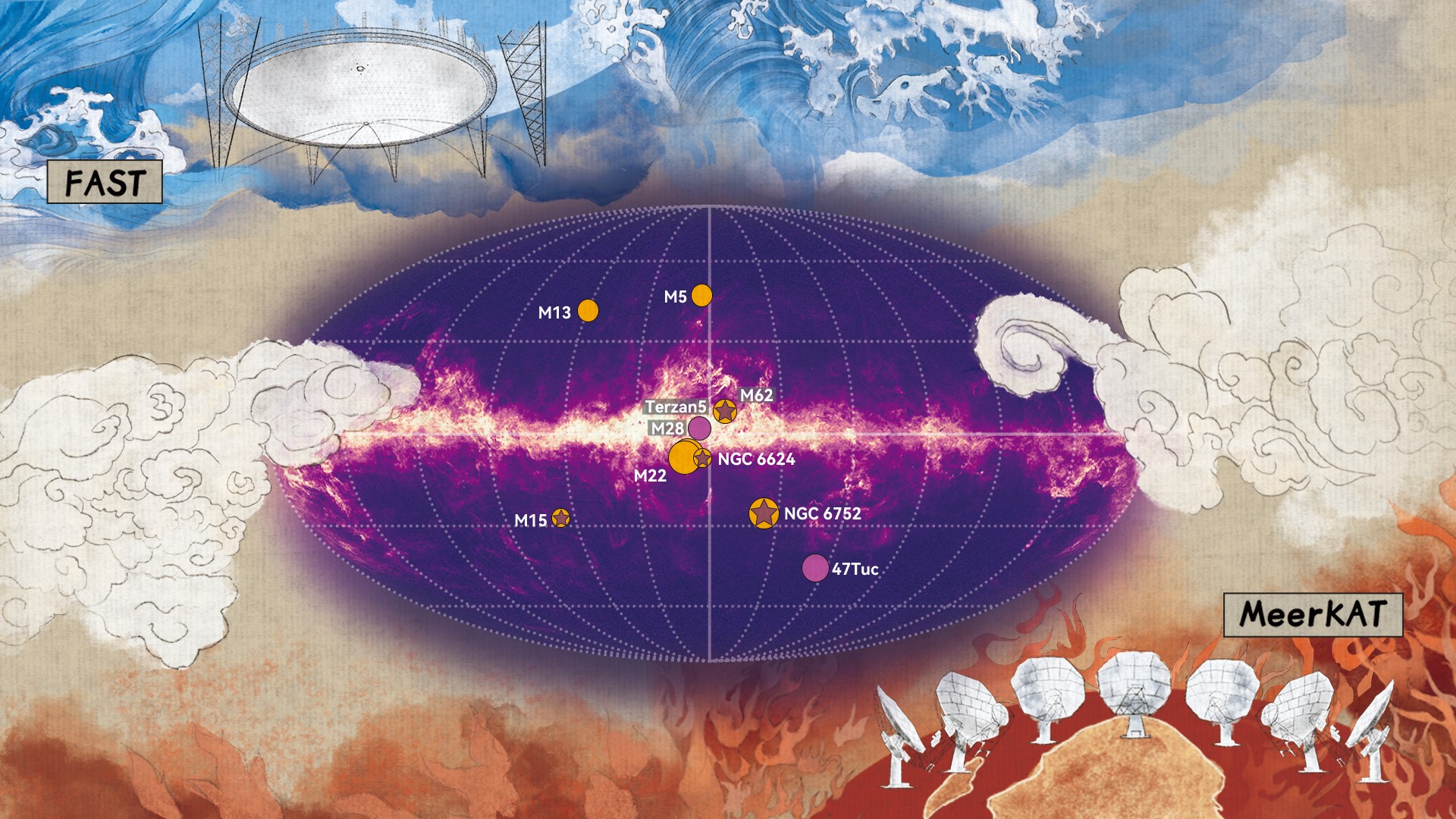
FAST Joins MeerKAT: Unveiling the Pristine Nature of Ancient Galactic Systems
In a milestone of international astronomical collaboration, Prof. Di Li's team at Tsinghua University, along with institutions in Italy, Australia, and Germany, have completed a high-precision polarization census of pulsars in globular clusters, utilizing the combined power of the FAST radio telescope in China and the MeerKAT array in South Africa. This study marks the first in-depth cooperatio...
More -
2025.04.25
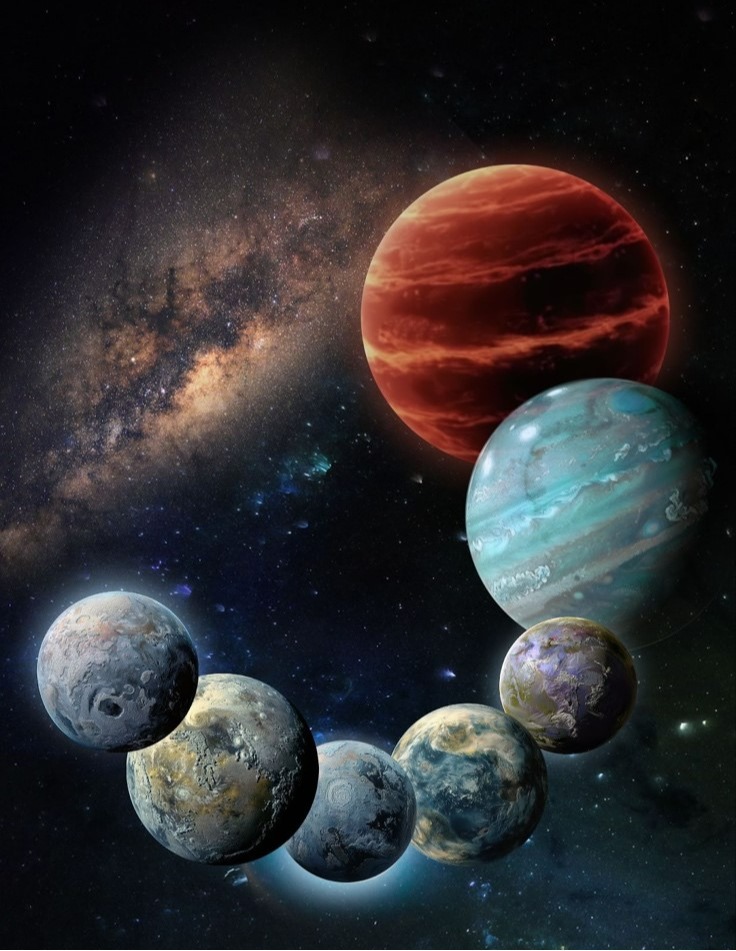
New Study Reveals Hidden Population of Cold, Rocky Planets
Super-Earth exoplanets—worlds slightly larger than Earth—are common in the outer regions of planetary systems, where gas giants like Jupiter are typically found. A new international study, published today in Science, adds an important piece to the puzzle of planetary system formation by highlighting a previously underexplored population of cold, rocky planets orbiting far from their stars.“W...
More