Recently, scholars from different countries and regions gathered in China for FRB2026, an international conference in the field of fast radio bursts (FRBs). Around the conference, a number of internationally renowned radio astronomers visited several institutes in Beijing including the Department of Astronomy, Tsinghua University (DoA) and the National Astronomical Observatories of the Chinese Academy of Sciences (NAOC).
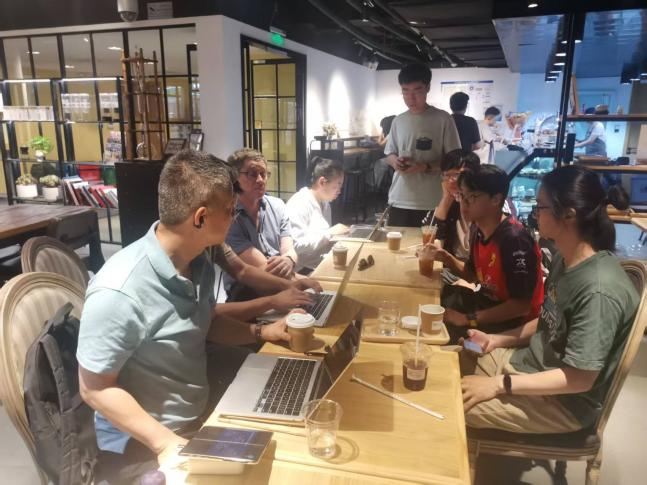
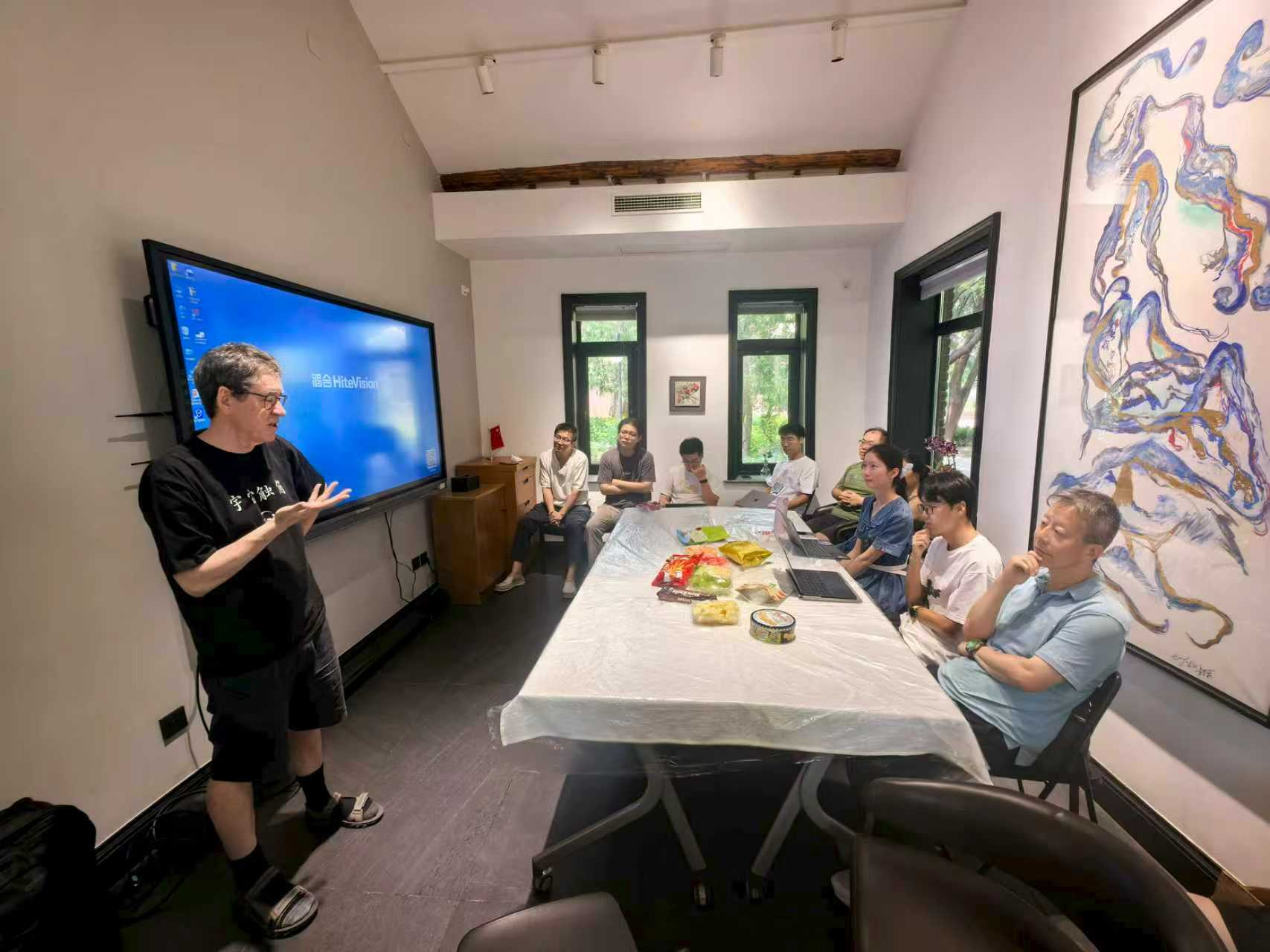
Matthew Bailes Visited the Department of Astronomy, Tsinghua University
From June 29th to July 5th, 2026, Matthew Bailes, Distinguished Professor of Astrophysics at Swinburne University of Technology, Fellow of the Australian Academy of Science, and recipient of the 2023 Shaw Prize in Astronomy, visited the Department of Astronomy, Tsinghua University. Professor Bailes is an internationally renowned radio astronomer whose long-standing research spans pulsars, FRBs, gravitational-wave detection, and related fields.
During the visit, Professor Bailes held in-depth discussions with faculty members and students in the department on topics including FRB and pulsar observations, searches for radio transients, data-processing methods, and future survey plans. These face-to-face exchanges deepened thinking on the relevant scientific questions, observing strategies, and technical approaches, while also creating new opportunities for stronger collaboration and links between our department and universities and radio-astronomy research teams in Australia.
FRB Scholars from Around the World Gather in Guiyang
From July 5th to 10th, the international conference FRB2026 was held in Guiyang, Guizhou, China. Scholars from around the world exchanged views on frontier questions involving FRBs including their origins and emission mechanisms , the activity patterns of repeating bursts, polarization and propagation effects, host galaxies and near-source environments, and cosmological studies using FRBs.
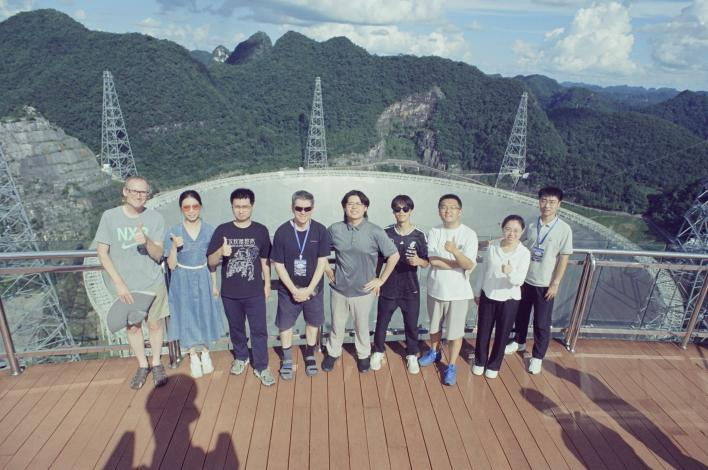
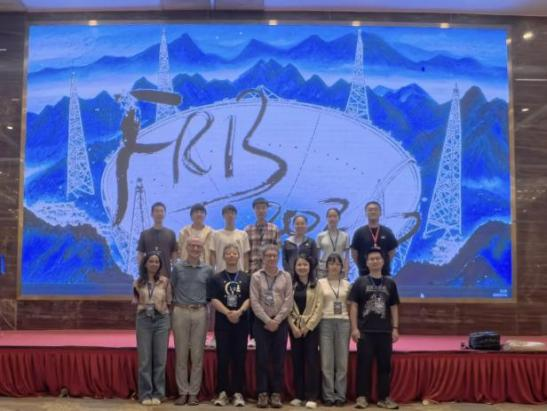
The left picture shows a group photo taken at the FRB2026 venue with several foreign scholars present. The foreign scholars in the first row include Manisha Caleb, Duncan Lorimer, and Matthew Bailes. The right picture shows a group photo taken at the FAST site.
The conference chairs included Researcher Weiwei Zhu from NAOC, Professor Di Li from DoA, and Professor Bing Zhang, Chair Professor of Astrophysics in the Department of Physics at the University of Hong Kong and Founding Director of the Hong Kong Institute for Astronomy and Astrophysics.
From Guiyang to Beijing: Academic Exchange Continues
After FRB2026 ended, a number of participating scholars traveled from Guiyang to Beijing to continue exchanges with Chinese teams.
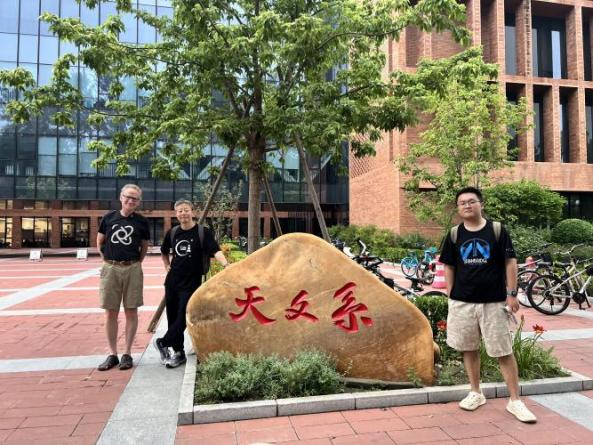
From July 10th to 16th, several FRB2026 participants, including Duncan Lorimer, Professor of Physics and Astronomy at West Virginia University, Fellow of the Royal Society, and recipient of the 2023 Shaw Prize in Astronomy; Joeri van Leeuwen, Senior Astronomer at ASTRON, the Netherlands Institute for Radio Astronomy, and Professor at Leiden University; Manisha Caleb, Senior Lecturer in the School of Physics at the University of Sydney; and Ethan van Woerkom, Postdoctoral Researcher in the Department of Physics at the University of Helsinki, visited the DoA and NAOC. They engaged in extensive discussions with researchers in China on FRBs and related frontier topics.
Professor Duncan Lorimer is a pioneering figure in the field of FRBs. In 2007, he and his collaborators discovered an extraordinarily bright extragalactic radio pulse lasting only milliseconds. This signal later became known as the "Lorimer Burst." Together with Professor Matthew Bailes and Professor Maura McLaughlin, he received the 2023 Shaw Prize in Astronomy for the discovery of FRBs.
International Exchange and Collaboration
With the Five-hundred-meter Aperture Spherical radio Telescope (FAST), China now internationally leads high-sensitivity observing capabilities for FRB research, and has achieved a series of important results in areas such as repeating-burst activity patterns, polarization properties, magnetized environments, and burst statistics. FAST not only continues to produce high-quality observational data, but also enables Chinese research teams to participate more deeply in global joint FRB observations and frontier scientific research.
The convening of FRB2026 in Guiyang, China, together with visits by multiple international participants to the DoA and NAOC, reflects China's growing international standing in the field of FRB research. Taking this exchange as an opportunity, the Department of Astronomy at Tsinghua University will further strengthen collaboration with NAOC, the University of Hong Kong, and international research institutions in the United States, Australia, the Netherlands, Finland, and other countries, building an in-depth international cooperation network in joint observations, data analysis, academic visits, and the training of young researchers.


