From October to November 2025, the Mayor of Pescara, Italy, together with representatives from leading Italian research institutions, visited the Department of Astronomy at Tsinghua University, laying a solid foundation for deepened collaboration in astrophysics between China and Italy. This series of visits included an initial meeting on October 20 by Pescara Mayor Carlo Masci and the city's Director for International and Institutional Affairs, Dr. Luca Saraceni, followed by a second visit from November 11 to 15 by Professor Remo Ruffini, Director of the International Center for Relativistic Astrophysics Network (ICRANet), and Professor Yu Wang, President of the International Center for Relativistic Astrophysics (ICRA), to advance academic cooperation.
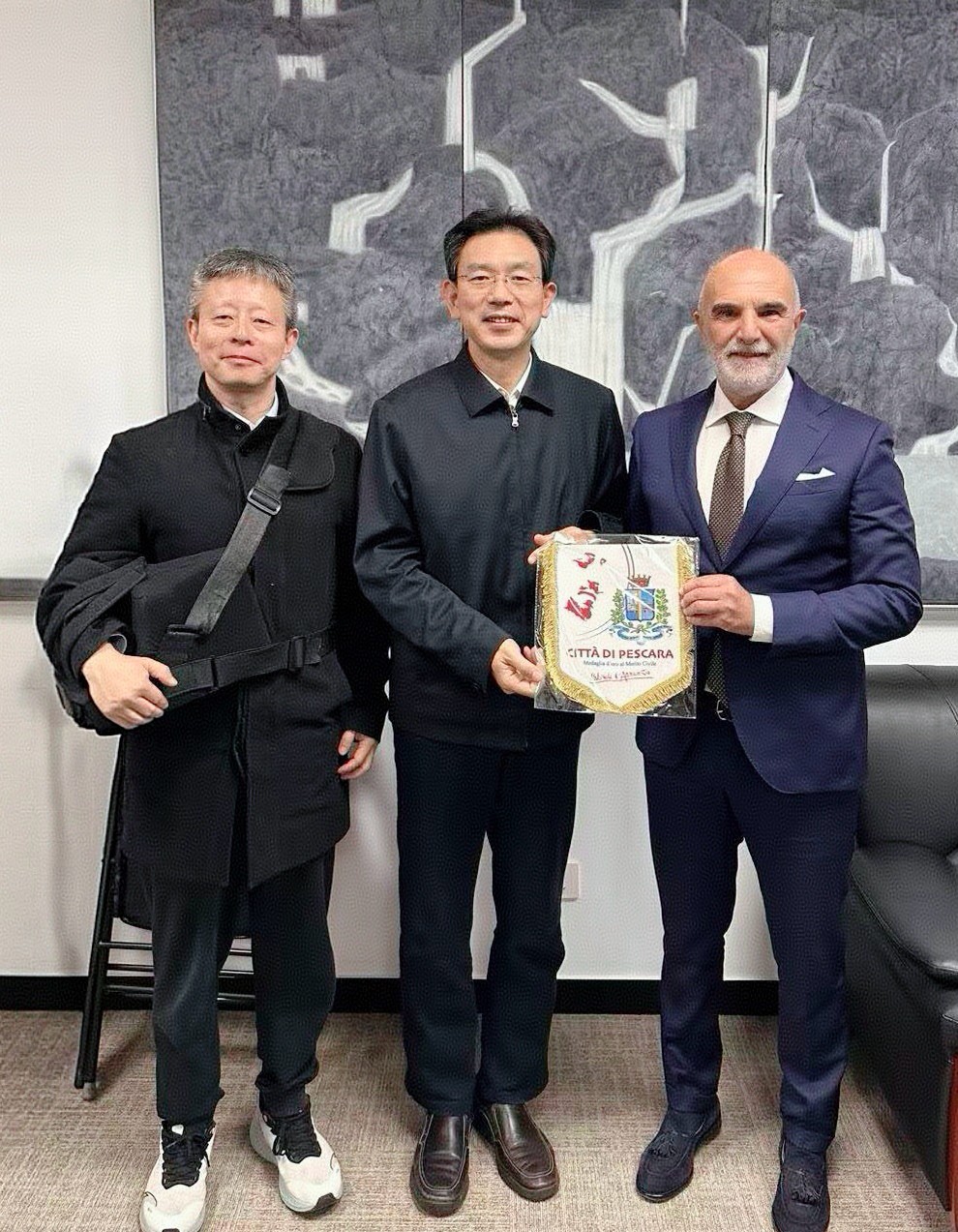
Figure 1. Meeting between Carlo Masci (right), Mayor of Pescara, and Tsinghua University President Luming Li (center) and Professor Di Li (left), Chair of the Department of Astronomy.
During the October 20 exchange, Mayor Masci and his delegation held an informal meeting with Tsinghua University President Luming Li and Professor Di Li, Chair of the Department of Astronomy, engaging in in-depth discussions on two core themes: research collaboration and cultural integration. On the same day, Mayor Masci and Professor Di Li were invited by the Italian Ambassador to China, Massimo Ambrosetti, for a luncheon at the Italian Embassy. In the realm of international scientific cooperation, both sides agreed to establish a regular mechanism for “scholar exchanges + joint research” to promote cross-disciplinary integration. Mayor Masci also proposed an innovative initiative—leveraging the platform of the “China-Italy Creativity Cooperation Week” to jointly develop a thematic project on Astronomy and Cultural Heritage. Using technologies such as artificial intelligence, the project aims to integrate astronomical science with the cultural heritage of both countries, enabling frontier scientific achievements to carry both academic significance and cultural vitality. After the meeting, the delegation visited the Department’s Radio Astronomy VR Laboratory, where they learned about key projects such as “Cosmic Antennae”. They spoke highly of the lab’s use of virtual reality technologies to simulate extreme astrophysical environments.
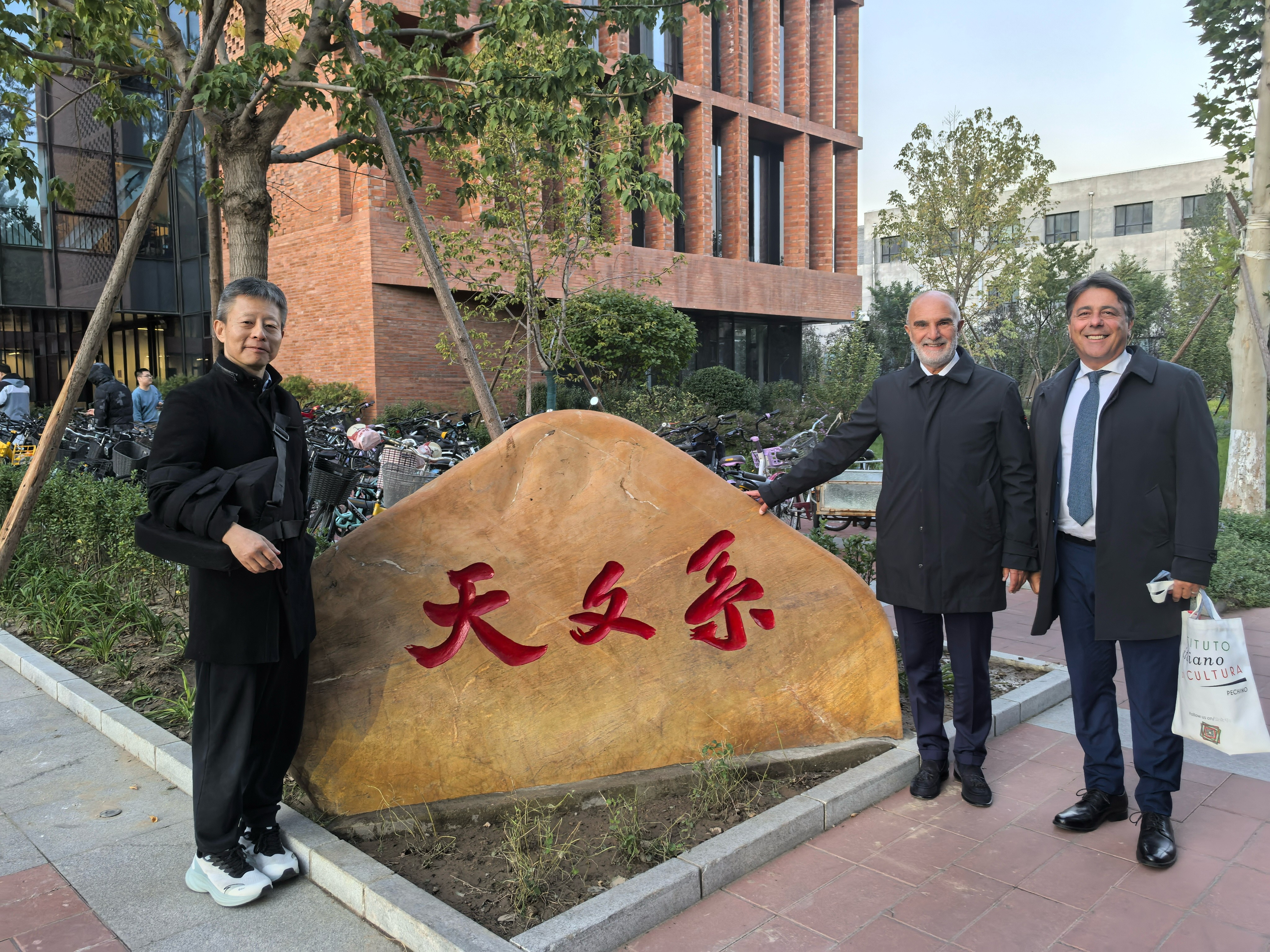
Figure 2: Professor Di Li (left), Chair of Tsinghua Department of Astronomy, with Carlo Masci (second from right), Mayor of Pescara, and Luca Saraceni (right), Director of International and Institutional Affairs.
From November 11 to 15, Professor Ruffini and Professor Yu Wang visited Tsinghua to meet with faculty including Professors Huan Yang, Xinyu Li, and Dongzi Li of the Department of Astronomy, as well as Dr. Pei Wang, Research Scientist at the National Astronomical Observatories. The discussions centered on prospects for China-Italy collaboration, including potential joint observations using the Sardinia Radio Telescope in Italy and the FAST radio telescope in China on frontier topics such as pulsars and fast radio bursts. The two sides reached preliminary agreements on several collaborative initiatives.
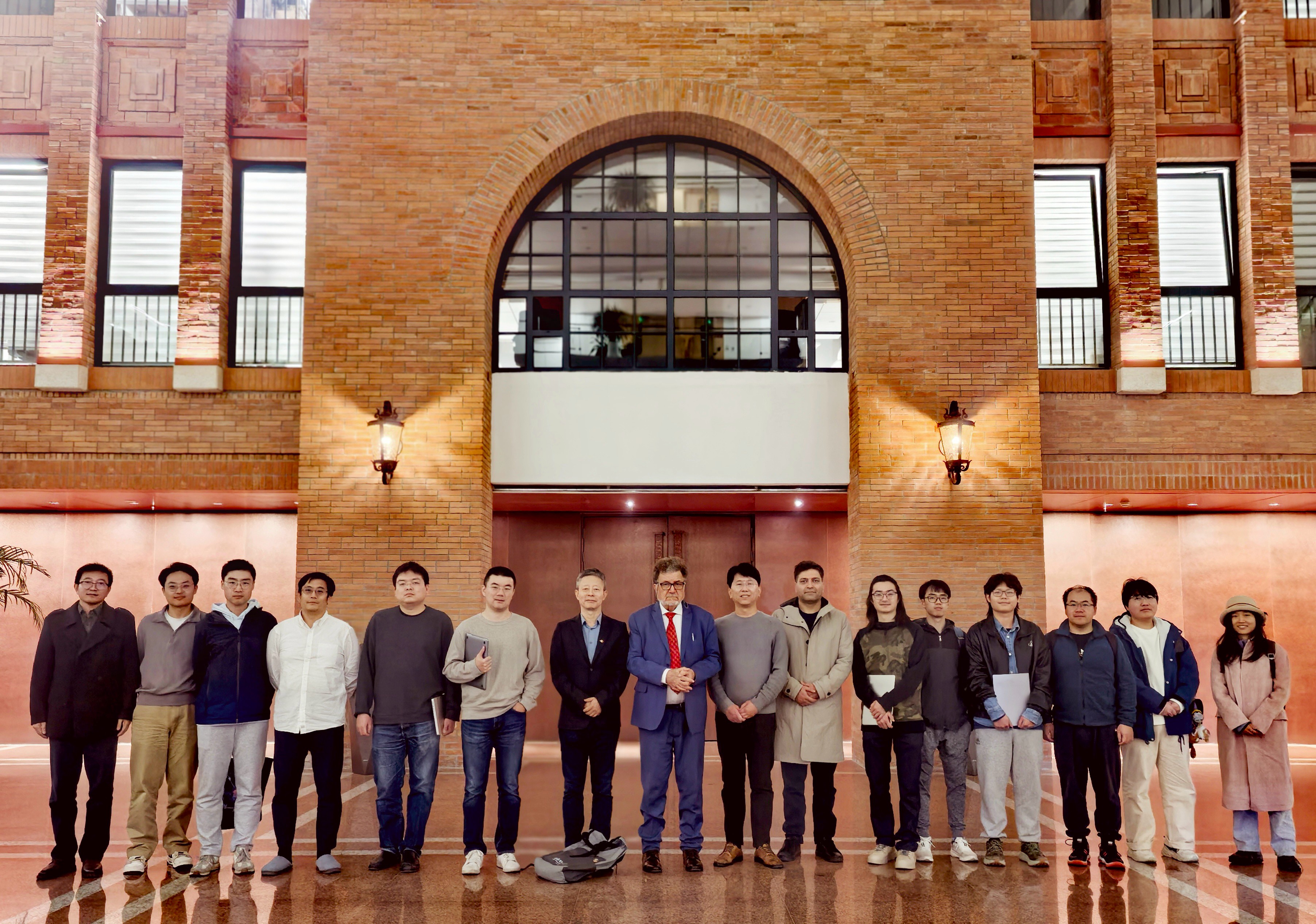
Figure 3: Professor Remo Ruffini (eighth from left), Director of ICRANet, Professor Yu Wang (ninth from left), President of ICRA, and faculty and students of Tsinghua Department of Astronomy.
After his October visit, Masci emphasized that Pescara will take this exchange as an important opportunity to further advance cooperation with Tsinghua University in academic exchange and scientific research, contributing to deeper technological collaboration between China and Italy at the municipal level. The implementation of the scientific outcomes from the November ICRANet visit will further advance the Department’s participation in international collaborations and provide continued momentum for China-Italy cooperation in fundamental scientific research.


